
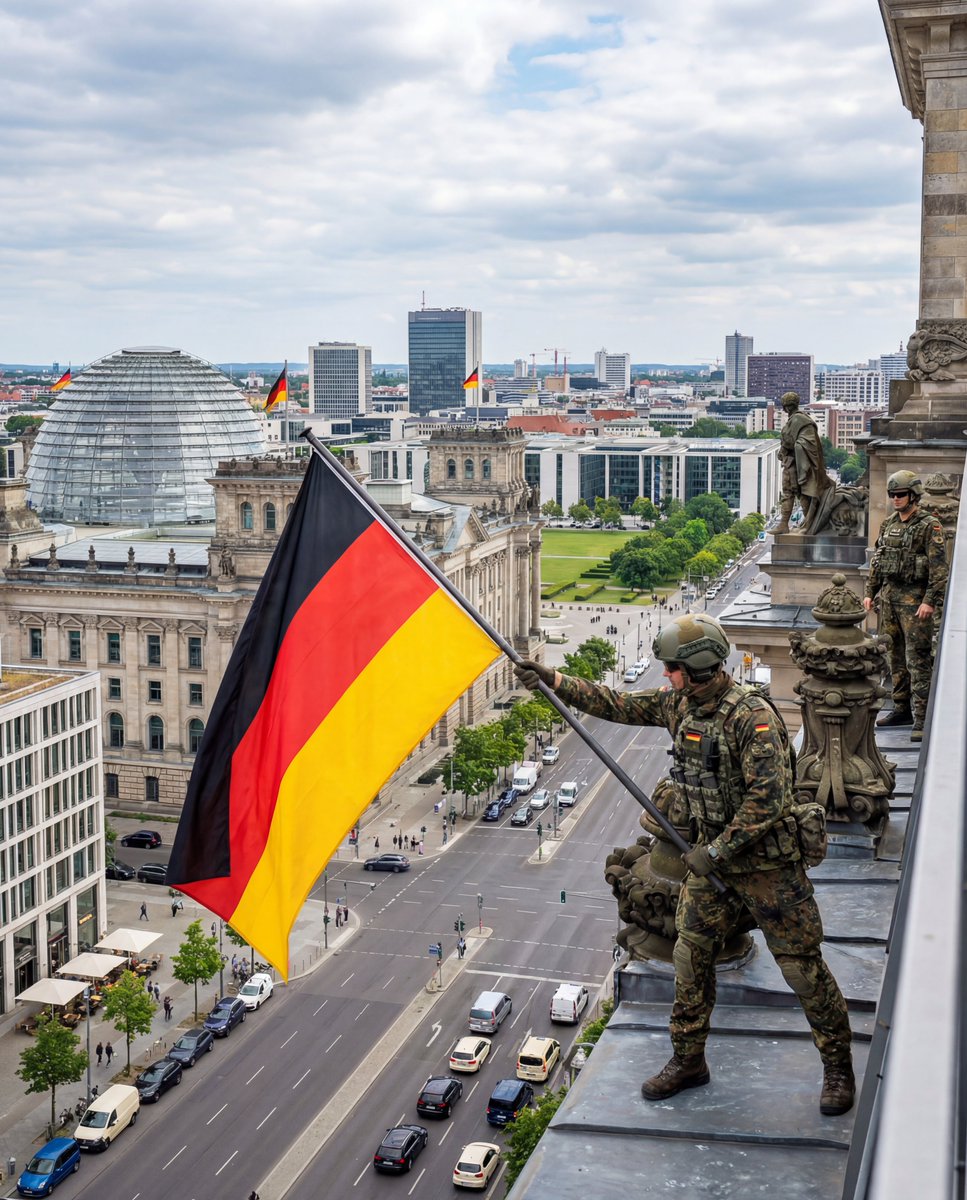
Create a german Soldiers Waving The Flag
How to german soldiers waving the flag in Berlin
0
Times used
0
Likes
Exploring History's Canvas: The "German Soldiers Waving The Flag" AI Art Style
History is not just a collection of dates and facts; it's a tapestry of powerful moments, human stories, and evocative imagery. With the advent of advanced AI image generation, we now have an unprecedented tool to visualize, reinterpret, and explore these historical narratives. One of the most compelling and artistically rich prompts that creators are exploring is "Create a German Soldiers Waving The Flag". This style, particularly when set in the historic heart of Berlin, allows artists, historians, and enthusiasts to generate powerful scenes that resonate with drama, triumph, or somber reflection. Using Orno's state-of-the-art AI image editor, you can step into the role of a director, crafting detailed and emotionally charged historical art from a simple text description.
This guide will delve deep into the nuances of this specific AI art style, showing you how to master the prompts, refine the details, and leverage Orno's powerful engine to create breathtakingly realistic or artistically stylized images of German soldiers in Berlin. Whether you're a digital artist creating concept art, a writer looking for a book cover, or a history buff wanting to bring a specific moment to life, you'll find the tools and techniques here to turn your vision into a digital masterpiece.
Crafting Your Vision: A Deep Dive into Prompt Engineering with Orno
The magic of text-to-image AI lies in the prompt. A well-crafted prompt is like a detailed set of instructions for a master artist. It guides the AI to not just generate an image, but to capture a specific mood, setting, and story. Let's break down the "German Soldiers Waving the Flag in Berlin" prompt to understand how each element contributes to the final artwork and how you can manipulate them for infinite creative possibilities.
Mastering the Core Prompt: "German Soldiers Waving the Flag"
This is the foundation of your creation. Each word here is a crucial building block:
- German Soldiers: This specifies the subject. You can add detail by mentioning a number ("Two German soldiers"), their condition ("weary soldiers," "elite stormtroopers"), or their era ("WW2 German soldiers," "Wehrmacht soldiers"). Being specific helps Orno's AI pull from more accurate visual data.
- Waving: This defines the action. But how are they waving? Consider modifiers to change the narrative. "Triumphantly waving" creates a very different image from "somberly holding" or "raising a tattered flag." This single word can shift the entire emotional tone of your piece.
- The Flag: Which flag? The AI might default to a common version, but you can specify. Prompts like "waving the Reichskriegsflagge" or "a battle flag with an iron cross" will produce more historically specific results. The flag's condition is also a powerful detail: "a pristine flag" versus "a smoke-stained, torn flag."
Setting the Scene: Adding "in Berlin" and Other Locational Modifiers
The location grounds your image in reality and adds a rich layer of context. "In Berlin" is a powerful start, but you can achieve stunning realism and narrative depth by being even more specific. Orno's AI recognizes famous landmarks, which can serve as the backdrop for your scene.
Consider these variations:
- `...in front of the Brandenburg Gate.`
- `...on the steps of the ruined Reichstag building.`
- `...in the rubble-strewn streets of Berlin in 1945.`
- `...overlooking a destroyed Berlin cityscape from a high vantage point.`
Each of these locational prompts tells a different story and gives the AI precise architectural and environmental cues to build a more believable world for your AI-generated historical scene.
Defining the Era and Atmosphere
An image of soldiers from the 1940s should look and feel different from a modern photograph. This is where you control the camera, the lighting, and the film stock. Use atmospheric and stylistic keywords to transport your viewer to another time.
- Time & Photography Style: Use terms like "vintage photograph," "black and white photo," "sepia tone," "grainy film," "daguerreotype style," or "autochrome" to evoke a specific historical period.
- Lighting & Mood: Lighting is everything. Is the scene taking place at "golden hour," with long, dramatic shadows? Or is it under the "harsh midday sun"? Use keywords like "cinematic lighting," "dramatic volumetric lighting," "somber mood," "foggy morning," or "dark and gritty" to command the emotional atmosphere of the image.
Fine-Tuning the Details: Uniforms, Equipment, and Composition
For the discerning creator, detail is paramount. Orno's AI model can render incredibly specific details if you guide it correctly. This is where you can truly show off your prompt engineering skills to create realistic soldier art.
- Uniforms & Gear: Get specific. Instead of just "soldiers," try "Wehrmacht soldiers in M40 field-gray wool tunics," "wearing Stahlhelm helmets," or "carrying Karabiner 98k rifles." The more accurate your terminology, the more detailed and authentic the output will be.
- Composition: Control the virtual camera. Use filmmaking and photography terms to frame your shot. "Wide-angle shot showing the scale of the destruction," "close-up on a soldier's determined face," "from a low angle to make the figures heroic," or "dynamic action shot" will give you precise control over the final composition.
Example Prompts to Try in Orno:
- Simple & Powerful: `Photorealistic image of a lone WW2 German soldier waving a flag in the ruins of Berlin, black and white.`
- Historically Detailed: `High-detail, grainy 1945 photograph of three Wehrmacht soldiers raising a tattered Reichskriegsflagge on the Reichstag building in Berlin. They are wearing weathered M42 uniforms and Stahlhelm helmets. Somber, overcast lighting.`
- Artistic & Cinematic: `Epic oil painting, cinematic lighting, a group of German soldiers waving a massive flag from the top of the Brandenburg Gate at sunset, long shadows, dramatic mood, style of Rembrandt.`
- Stylized Concept Art: `Digital concept art of a futuristic German soldier waving a glowing flag in a dystopian, cyberpunk Berlin. Neon lights, rainy atmosphere, high-contrast, style of Syd Mead.`
Why Choose Orno for Generating Historical AI Imagery?
While many tools can generate images, Orno is engineered for creators who demand control, quality, and realism. When tackling a subject as nuanced as historical military art, the power of your AI image editor matters. Here’s why Orno stands out:
- Unmatched Realism and Detail: Orno's AI models are trained on vast datasets that include historical photography and art, enabling them to understand the subtle details of uniforms, equipment, and architecture that make a scene believable.
- Superior Prompt Interpretation: Our AI excels at interpreting complex, multi-layered prompts. You can stack details about lighting, composition, mood, and historical specifics, and Orno will weave them together into a cohesive and stunning image.
- Creative Freedom and Iteration: Don't just generate once. Orno's user-friendly interface makes it easy to tweak your prompts, experiment with different styles, and iterate on an idea until it perfectly matches your vision. Features like negative prompts allow you to exclude elements you don't want, giving you even finer control.
- High-Resolution Output: Create art that's ready for any application. Orno delivers high-resolution images perfect for printing, including in digital portfolios, using as concept art for film or games, or for any professional project where quality is non-negotiable.
Beyond the Prompt: Ethical Considerations and Creative Applications
Imagery involving military history, especially from World War II, is inherently powerful and can be sensitive. It's important to approach this subject with historical context and respect. Orno is a tool for creation, and with that comes a responsibility to create thoughtfully. This AI art style is not about glorifying conflict, but about providing a medium for historical exploration, artistic expression, and storytelling.
The applications are vast and varied:
- Filmmakers and Game Developers: Quickly generate concept art, storyboards, and mood boards for historical projects.
- Authors and Publishers: Create compelling and unique book covers or interior illustrations for historical fiction and non-fiction.
- Educators and Students: Visualize key historical moments and settings for presentations, projects, and learning aids.
- Digital Artists and Hobbyists: Explore historical themes, practice prompt engineering, and create powerful personal art projects that tell a story.
Frequently Asked Questions (FAQ)
Can I specify the type of German flag in my AI prompt?
Yes, absolutely. Being specific is key to getting the result you want. You can use terms like "Wehrmacht battle flag," "Reichskriegsflagge," "Iron Cross flag," or even "modern German flag" if you want to create a contemporary or alternate-history scene. The more precise your description, the more accurately Orno's AI will render the flag.
How can I make my AI-generated soldiers look more realistic?
To increase realism, focus on adding layers of detail to your prompt. Use keywords like "photorealistic," "ultra-detailed," "8k," and "sharp focus." Describe the textures of their uniforms ("worn wool tunic," "scratched leather boots") and the condition of their faces ("grimy face," "determined expression," "stubble"). Also, specify realistic lighting, such as "soft natural lighting" or "overcast daylight."
Is it possible to create these images in different art styles?
Of course! Orno is a versatile creative tool. Simply add your desired art style to the end of your prompt. Try adding modifiers like "in the style of an oil painting," "as a charcoal sketch," "epic comic book panel art," "vintage propaganda poster style," or "watercolor illustration." This allows you to blend historical subjects with any artistic medium you can imagine.
Does Orno's AI understand specific historical details like uniforms and equipment?
Yes, Orno's AI model has been trained on an extensive library of historical data. For the best results, use accurate terminology in your prompt. Naming specific items like "M40 Stahlhelm helmet," "MP 40 submachine gun," or "jackboots" can significantly improve the historical accuracy and detail of the generated image. The more you know, the more you can guide the AI to create a truly authentic scene.
Can I use the images generated with Orno for my projects?
Yes. The images you create with Orno are yours to use for a wide range of personal and commercial projects. This empowers you to use your unique creations for book covers, websites, game assets, concept art, and more. We always recommend checking our latest Terms of Service for specific details on usage rights.
Ready to command the canvas of history? Try Orno's AI Image Editor today and bring your most ambitious historical visions to life with unparalleled detail and creative control.
Use This Prompt
Transform your images with AI
Save this prompt as its own icon for one-tap access.