
Create an analog Clock Reading 15:32 Not
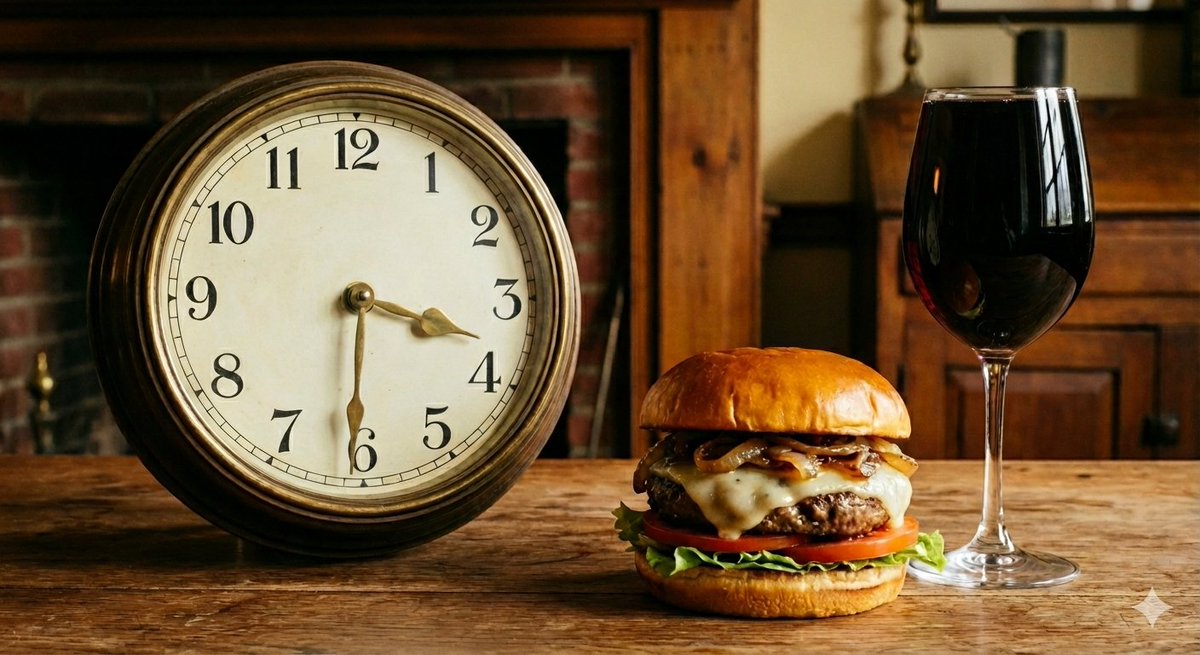
How to an analog clock reading 15:32 [Not digital and no other time], a burger with grilled golden provolone cheese, and a glass of red wine filled to the...
0
Times used
0
Likes
Unlocking Hyper-Realism: Mastering the "Analog Clock Reading 15:32 Not" Prompt with Orno
In the expansive universe of AI image generation, some prompts act as simple commands, while others are intricate recipes for digital masterpieces. The prompt, "Create an analog Clock Reading 15:32 Not," falls firmly into the latter category. It's not just a request; it's a challenge, a test of an AI's ability to comprehend specificity, context, and nuance. It’s a perfect example of how advanced prompt engineering can transform a simple idea into a stunningly realistic and evocative scene. Here at Orno, we believe that understanding the anatomy of such a detailed prompt is the key to unlocking your full creative potential. This guide will delve deep into this fascinating AI image style, showing you how to master it and apply its principles to create breathtaking visuals with the Orno AI image editor.
The Art and Science of a Deceptively Simple Prompt
Let's break down the full prompt to understand its power: "Create an analog clock reading 15:32 [Not digital and no other time], a burger with grilled golden provolone cheese, and a glass of red wine filled to the..." At first glance, it seems straightforward. But for an AI, each component presents a unique set of instructions and potential pitfalls. This is where the magic of a powerful AI engine like Orno's truly shines.
- The Core Challenge: The Analog Clock at 15:32. This is the most difficult part for many text-to-image models. AI, particularly in its earlier stages, famously struggles with rendering accurate text, numbers, and symbols. Asking for a specific time (3:32 PM) on an analog clock requires the AI to understand not just the numbers, but the correct positioning of the hour and minute hands. The negative constraint "[Not digital and no other time]" is crucial. It tells the AI to avoid the easier path of generating a digital display and reinforces the need for precision.
- Building the Atmosphere: The Burger. This isn't just "a burger." It's "a burger with grilled golden provolone cheese." This level of detail is vital. The words "grilled" and "golden" provide textural and color information, pushing the AI towards a more photorealistic and appetizing result. It prompts the model to consider the effects of heat on cheese, the char marks on the patty, and the overall composition of a gourmet meal.
- Adding Sophistication: The Glass of Red Wine. Again, specificity is key. "A glass of red wine" sets a mood—one of relaxation, indulgence, or a late afternoon treat. The incomplete phrase "filled to the..." leaves a little room for the AI's interpretation, often resulting in a natural-looking fill level. This element adds depth, color contrast, and a sense of story to the image. Is this a celebration? A quiet moment of solitude? The viewer gets to decide.
Why This AI Art Style Captures the Imagination
The "Analog Clock 15:32" prompt is more than just a technical exercise in AI image generation; it's a gateway to creating art that tells a story. It’s a modern take on the classic still life, capturing a fleeting moment with digital precision.
Crafting a Narrative in a Single Frame
The time 15:32 is specific and unusual. It’s not lunchtime, it’s not dinnertime. It’s that in-between moment in the afternoon, a pause in the day. This specific time, paired with the indulgent meal, creates an instant narrative. It speaks of a deadline just met, a personal reward, or a quiet rebellion against the typical 9-to-5 schedule. When you generate an image using this prompt in Orno, you're not just creating a picture of a clock and a burger; you're creating a mood, a backstory, and a piece of art that resonates on an emotional level.
Mastering Photorealism and Detail with Orno
This style is the perfect training ground for anyone looking to achieve hyper-realism in their AI-generated images. It forces you to think like a photographer or a painter. You have to consider:
- Lighting: Is it the warm, soft light of a late afternoon sun streaming through a window? Or the moody, artificial light of a cozy bistro?
- Texture: Can you almost feel the texture of the toasted bun, see the glisten of the melted cheese, and notice the condensation on the wine glass?
- Composition: How are the elements arranged? Is the clock in the background, slightly out of focus, or is it the central subject?
The Orno AI image editor is finely tuned to understand these subtle, descriptive keywords. By adding terms like "soft natural lighting," "macro shot," "detailed texture," or "shallow depth of field," you can guide our AI to produce results that are virtually indistinguishable from professional photography.
How to Create Your "Analog Clock 15:32" Image in Orno: A Step-by-Step Guide
Ready to create your own masterpiece? Orno makes it easy to bring this complex prompt to life. Follow these steps to generate your perfect afternoon scene.
- Start with the Base Prompt: Open the Orno AI image generator and paste in the core prompt: Create an analog clock reading 15:32 [Not digital], a burger with grilled golden provolone cheese, and a glass of red wine.
- Add Stylistic Keywords: This is where you inject your own creativity. Think about the mood you want to achieve. Append powerful keywords to the prompt to guide Orno's engine.
- Iterate and Refine: Your first generation might be close, but not perfect. Don't be afraid to tweak your prompt. Maybe change "red wine" to "a dark stout beer" or "provolone cheese" to "sharp cheddar." Change the lighting or the camera angle. Each small change can lead to a dramatically different and improved result.
Inspirational Prompt Variations to Try in Orno
Use these examples as a starting point for your creative journey. Copy, paste, and modify them in Orno to see the incredible variety you can achieve.
- For a Cinematic, Moody Look:
An old wooden analog clock showing exactly 15:32, on a rustic bar next to a gourmet burger with melted provolone and a half-full glass of cabernet sauvignon. Cinematic lighting, moody atmosphere, shallow depth of field, hyperrealistic, 8k. - For a Bright, Commercial Photography Style:
Clean product photography of a modern analog clock reading 15:32. Next to it, a perfectly assembled burger with golden grilled provolone and a sparkling glass of red wine. Bright studio lighting, clean white background, sharp focus, high detail. - For a Vintage, Retro Feel:
A 1970s style analog wall clock showing 15:32. On a formica table below, a classic diner burger with provolone cheese and a simple glass of red wine. Vintage photo, grainy film texture, warm nostalgic tones, kodachrome style. - For an Artistic, Painted Style:
Oil painting of a still life scene. An antique analog clock's hands are at 15:32. A juicy burger with provolone cheese sits on a plate beside a dark glass of red wine. Textured brush strokes, chiaroscuro lighting, style of the Dutch Masters.
Frequently Asked Questions (FAQ)
Why do AI image generators sometimes get clocks and text wrong?
AI models learn from billions of images, but they don't "read" in the human sense. They recognize patterns of shapes and pixels. A clock face is a complex pattern of lines and numbers that must be in a precise configuration to be correct. Similarly, text is a system of symbols that requires logical consistency. Orno's advanced models have undergone extensive training to improve accuracy in these areas, and using highly specific prompts with negative constraints, as seen in this style, significantly increases the chances of a perfect result.
What is a "negative prompt" and why is it important?
A negative prompt is an instruction that tells the AI what not to include in an image. In our example, "[Not digital and no other time]" is a negative prompt. It's a powerful tool for refining your creations by eliminating common errors or unwanted elements. You can use it to remove things like text, extra limbs, ugly watermarks, or specific colors, giving you much greater control over the final output.
How can I make AI-generated food look more realistic with Orno?
The key to realistic AI food photography is detail and lighting. Use descriptive words related to texture and preparation. Instead of "burger," try "juicy flame-broiled burger." Add keywords like "steam rising," "glistening," "freshly baked," or "macro detail." For lighting, try "soft window light," "dramatic side lighting," or "golden hour glow." Orno's engine excels at interpreting these sensory details to create mouth-watering images.
Can I use the principles from this prompt for other subjects?
Absolutely! The core techniques of the "Analog Clock 15:32" style—extreme specificity, sensory details, and the use of negative prompts—are universal. You can apply them to generate anything with high precision, from a specific model of a car with custom details to a portrait of a person with unique accessories. This prompt is a lesson in control, teaching you how to be the true art director of your AI creations.
Start Creating Your Picture-Perfect Moment with Orno
The "Analog Clock Reading 15:32 Not" prompt is more than a command; it's a testament to the power of precise, creative language in the world of AI art. It proves that with the right tool and the right technique, you can guide an AI to create not just a picture, but a story. You've seen the breakdown, you've learned the principles, and you have the inspiration. Now, it's your turn to play with time. Open the Orno AI image editor, use these techniques, and generate the scene that's waiting in your imagination. Create your perfect moment, captured forever in a single, stunning frame.
Use This Prompt
Transform your images with AI
Save this prompt as its own icon for one-tap access.